Asian Desk
With nearly four decades of experience, Di Blasi, Parente & Associados stands as one of Brazil’s leading Intellectual Property law firms, recognized for delivering strategic, business-oriented, and globally connected solutions in trademarks, patents, litigation, copyright, technology, compliance, data protection, and regulatory matters.
As commercial, technological, and innovation ties between Asia and Latin America continue to expand, our Asian Desk was created to serve as a dedicated bridge between markets, cultures, and businesses, supporting Asian businesses operating in Brazil and Brazilian companies expanding across Asia.
We are awarded and recognized in the most important national and international legal publications and rankings, which recognize our work in serving market-leading companies.
🏆 Chambers and Partners | The Legal 500 | Leaders League | Lexology | WTR 1000 | IAM 1000 | IP STARS | Others

Our Asian Desk delivers personalized assistance for a wide range of industries, including technology, electronics, entertainment, cosmetics, pharmaceuticals, food & beverage, fashion, automotive, manufacturing, and emerging digital sectors.
We support clients in:
- Trademark and patent prosecution in Brazil and abroad
- IP portfolio management and strategic protection
- Anti-counterfeiting and enforcement actions
- Customs recordation and border measures
- Copyright and technology protection
- IP litigation and dispute resolution
- Contracts, licensing, and technology transfer agreements
- Data protection and regulatory compliance
- Strategic advisory for market entry and expansion
- Cross-border innovation and business intelligence initiatives
Brazil as a strategic partner

More than protecting intellectual property, we help build lasting connections between innovation, business, and global growth.
Our content
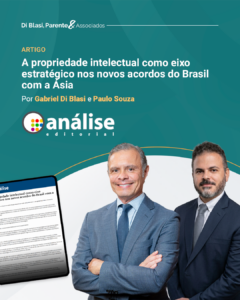
These agreements cover sensitive and strategic sectors of the Brazilian economy, including agriculture, technological innovation, pharmaceuticals, cosmetics, and regulatory technical cooperation. Initiatives involving institutions such as Embrapa in the agribusiness sector and Anvisa in the pharmaceutical and cosmetics industries demonstrate that this is not merely about commercial expansion, but also about productive and technological integration.
In this context, intellectual property assumes a central role.
Whenever there is technical cooperation, joint development, technology transfer, or integration of production chains, the protection of intangible assets such as patents, trademarks, industrial designs, trade secrets, and know-how becomes essential to ensure legal certainty, predictability, and balance in commercial relationships.
South Korea, a global benchmark in innovation and in sectors such as cosmetics and advanced technology, and India, internationally recognized for its progress in the development of pharmaceuticals and biologic medicines, particularly in the field of oncology, are increasingly occupying a prominent position as Brazil’s strategic commercial partners in Asia.
This movement adds to China’s already consolidated leadership in Brazil’s trade relations. As a result, a strategic triad composed of China, India, and South Korea is emerging, redefining Brazil’s economic and technological cooperation axis for the coming decades.
The impacts extend far beyond traditional trade. The expansion of these partnerships opens new markets for Brazilian products, strengthens the country’s participation in global innovation chains, and creates opportunities in sectors such as high-technology agriculture, livestock, bioeconomy, pharmaceuticals, cosmetics, and healthcare technology.
It is important to note that commercial agreements and international cooperation instruments, even when they do not explicitly address intellectual property, inherently rely on mechanisms for the legal protection of the intangible assets involved. Technology transfer and knowledge sharing can only be sustained through institutional trust and adequate legal safeguards.
Recent developments indicate that Brazil is not only seeking to expand exports, but also to consolidate long-term strategic partnerships with Asia through an agenda that combines trade, innovation, and legal protection.
In this scenario, intellectual property is no longer merely a restricted technical subject, but rather a structural element in Brazil’s international positioning strategy.
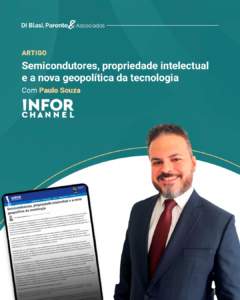
Published by InforChannel, by Paulo Armando
Growing concerns over a potential new global semiconductor crisis have once again raised alarms across several industries, particularly the automotive sector. One of the recent events contributing to increased tensions was the Dutch government’s takeover of Nexperia, a Chinese-owned company, under the argument of protecting strategic and sensitive intellectual property assets. In response, China imposed restrictions on the export of essential components and materials, reinforcing the well-known bottlenecks in the global supply chain already experienced during the Covid-19 pandemic.
The chip and semiconductor production chain is one of the most complex and globalized structures in the contemporary economy, involving multiple technological stages ranging from circuit design and wafer manufacturing to packaging and testing, with these activities distributed among different countries and specialized companies. In this context, intellectual property assets, especially patents and trade secrets, play a crucial role in determining who controls certain critical stages of the production chain.
Leading companies in the sector hold extensive patent portfolios protecting everything from chip architectures to lithography processes and semiconductor materials. In addition, trade secrets safeguard sensitive manufacturing techniques that are often difficult to replicate solely through publicly available patent documents. This legal framework creates technological barriers and makes access to certain technologies dependent on licensing agreements, partnerships, or even litigation.
In recent years, however, the dispute over these technological assets has evolved beyond the corporate sphere and has increasingly taken on geopolitical dimensions. Countries have started treating semiconductors as strategic infrastructure, essential for sectors such as artificial intelligence, telecommunications, defense, and the automotive industry. The race for technological sovereignty is also directly linked to access to critical inputs, including rare earth metals and other strategic minerals required for chip manufacturing and for the expansion of data centers dedicated to advanced computing.
In this scenario, governmental measures such as export restrictions, foreign investment controls, and industrial policies aimed at strengthening domestic semiconductor production are likely to intensify. More than a commercial dispute, the potential chip crisis reveals how intellectual property, strategic natural resources, and industrial policy have become central elements in the technological competition among major global powers, with direct impacts on global production chains and on entire sectors of the world economy.
Published on Migalhas, by Paulo Armando
China has just launched an ambitious national plan aimed at becoming the global leader in the field of BCIs, Brain Computer Interfaces, and Computational and Cognitive Intelligence technologies capable of directly connecting the human brain to digital devices. The official document, prepared by seven Chinese ministries and published by the State Council, establishes technical advancement goals through 2027 and seeks to consolidate China’s industrial leadership by 2032.
The Chinese strategy stands out for its strong coordination among the central government, regulatory authorities, universities, and private companies. This integration accelerates the transition from basic research to clinical and commercial applications, attracting international attention, especially from countries with significant economic ties to China, such as Brazil. In a scenario where the pace of innovation exceeds the regulatory adaptation capacity of many markets, foreign companies interested in importing or distributing these technologies must consider the legal and regulatory aspects involved from the outset.
The plan is structured around five major strategic pillars that operate as integrated laboratories: development of essential components; hardware and software integration; medical applications; non invasive devices for everyday use; and the creation of an industrial and regulatory ecosystem. These centers function as scientific transformation platforms with clear industrial and commercial implementation goals.
Practical results are already becoming visible. Companies such as NeuroXess and NeuCyber NeuroTech have demonstrated significant clinical advances. In Shanghai, patients with paralysis were able to control applications and play chess using only brain signals. The Beinao 1 chip, developed by the Chinese Institute for Brain Research, demonstrated stability and safety in clinical trials, signaling that the technology is ready for global expansion.
China is also investing heavily in the consumer market with non invasive BCI devices such as headphones, helmets, and glasses equipped with neural sensors. Applications include fatigue monitoring for drivers, industrial accident prevention, and thought controlled video games. China’s ability to scale production of these devices, combined with its leadership in electronic manufacturing, reinforces expectations that such products will soon enter international markets.
Brazil is, in fact, a promising market for emerging technologies. However, the entry of these solutions into the country requires strategic legal attention to ensure regulatory compliance, legal certainty, and freedom to operate, preventing the infringement of intellectual property rights. In addition, technologies that process neural signals handle sensitive personal data, including biometric and neurophysiological information, classified as such under the LGPD. This demands a high level of privacy governance, with measures ensuring transparency, consent, and information security from the earliest stages of product development.
Certainly, this scenario may also drive new legislative and regulatory discussions in Brazil, such as the ongoing reform of the Civil Code currently under debate in the National Congress. The proposed text introduces neuro rights as an inseparable part of personality rights, granting them the same legal protection and establishing that they cannot be transferred, waived, or limited. Ultimately, this development will test the adaptability of Brazilian legal institutions, particularly those related to personality rights.
Additionally, within Brazil, revolutionary BCI based solutions may raise further public health related issues, including requests for incorporation into the public healthcare system through CONITEC evaluation and recommendation, lawsuits seeking access to these technologies for patients unable to afford them, registrations before regulatory authorities, and other claims that will need to be analyzed and decided within the national system. This uniquely Brazilian landscape requires innovators to maintain a careful and informed understanding of the country’s legal and institutional framework.
Furthermore, as these technologies advance through companies from different countries, issues involving standardization and interoperability are likely to emerge. Combined with patent protections held by innovative market players, this may create competitive challenges for both markets and legal systems, similar to the disputes involving Standard Essential Patents, or SEPs, which have become a new frontier in geopolitical and technological conflicts among global powers.
In summary, China is advancing strategically in a field with enormous social and economic impact. The rise of neural technologies, still under discussion and observation in many countries, requires international players to adopt a cautious, informed, and legally well structured approach. For foreign companies, including Chinese enterprises seeking to operate in Brazil with BCI based solutions, the support of a legal partner specialized in intellectual property, data protection, and technology regulation will be not only valuable, but essential.
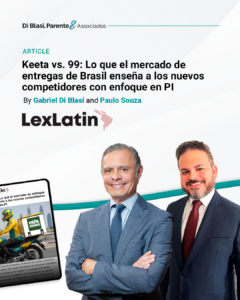
Published by Lex Latin, by Gabriel Di Blasi and Paulo Armando
Brazil is the largest and most competitive delivery market in Latin America, with more than 100 million app users and rapidly growing revenues. Established companies, especially iFood, benefit from first mover advantages, exclusive restaurant relationships, and strong consumer loyalty. New entrants face daunting operational scale, regulatory complexity, and the need to differentiate themselves both in app stores and on crowded city streets.
In addition, Brazil’s continental scale complicates logistics and regulatory compliance. Labor and regulatory frameworks for courier services and urban operations vary across municipalities, while reputational and consumer protection risks increase with the speed of expansion. Established players maintain strong restaurant relationships and highly refined sales channels. Differentiation must be substantial, involving technology, reliability, and service breadth, rather than merely imitative interfaces or color schemes. In this environment, Chinese backed rivals such as 99, owned by DiDi, and Keeta, backed by Meituan, have brought their rivalry from market tactics into the courtroom, transforming brand identity and platform conduct into central litigation battlegrounds.
Brazilian intellectual property law does not expressly codify trade dress protection. However, Brazilian courts, especially the Superior Court of Justice, routinely protect the overall visual identity of products and services in order to prevent consumer confusion. Protection may occur through multiple layers, including trademarks for word and device marks, industrial designs for shapes and graphic elements, software registration for source code, and patents or utility models for qualifying technical features.
For delivery platforms, where visual relevance through app icons, user interfaces, uniforms, and vehicle design enables rapid consumer recognition, trade dress strategy can become just as important as traditional trademark filing programs.
Within this disputed landscape and intellectual property framework, Keeta and 99 are currently involved in three lawsuits before the São Paulo State Court, using intellectual property assets as a battlefield in the fight for market share within the delivery segment.
Keeta v. 99: Alleged Anticompetitive Exclusivity
Keeta alleges that 99 restricts restaurants from partnering with competing platforms and penalizes businesses that engage in multi platform operations. The court considered the allegations potentially anticompetitive and requested the opinion of Cade, Brazil’s antitrust authority. Any preliminary injunction will be considered after 99 presents its defense. The case places platform exclusivity, loyalty incentives, and potential exclusionary conduct theories directly under scrutiny.
Keyword Advertising and Google Ads
Keeta alleges that 99 purchased the keyword “Keeta” to divert consumer traffic. The court issued a preliminary order prohibiting 99 from using or purchasing keywords containing Keeta’s name or trademark, characterizing the practice as unfair competition in the digital environment. The dispute highlights how brand bidding strategies increasingly create unfair competition risks capable of generating litigation, particularly for new entrants seeking clean digital acquisition channels.
Trademark and Trade Dress Infringement
99 accuses Keeta of appropriating distinctive elements such as color palettes, application design, typography, and delivery uniforms, allegedly creating consumer confusion and diluting the 99 brand. Keeta argues that its green and yellow scheme derives from Meituan’s global identity; that yellow is common within Brazil’s delivery and logistics industries and therefore cannot be monopolized; and that, if imitation were the intention, the logical target would have been iFood’s leading red branding. The court postponed any injunction, including forcing Keeta to abandon yellow, until after evidence production, emphasizing the need for technical and semiotic analysis to assess similarity and market confusion. The dispute demonstrates that Brazilian courts require robust expert evidence in trade dress litigation, particularly where color schemes and interface similarities depend on consumer perception and sector standards.
These disputes highlight several strategic issues that intellectual property professionals and companies entering the Brazilian market should carefully consider.
Pre Entry Visual Clearance
Companies should conduct visual benchmarking against existing platforms, including applications, uniforms, delivery equipment, and storefront materials. Independent creation processes and distinctive characteristics should be documented to reduce exposure to future trade dress claims.
Digital Marketing Hygiene
Businesses should establish search engine marketing policies that avoid bidding on competitors’ trademarks and avoid negative keyword manipulation. Agencies and marketing teams should receive clear instructions, as Brazilian courts increasingly treat aggressive SEM tactics as unfair competition.
Evidence Readiness
Companies involved in trade dress litigation should expect courts to require semiotic studies and consumer perception analyses. Design rationales, A/B testing files, and consumer research should be preserved to demonstrate differentiation or rebut allegations of confusion.
These disputes also create important competition law implications beyond private litigation, as Cade continues to examine practices capable of excluding competitors, including exclusivity agreements with restaurants, loyalty incentives that discourage multi platform participation, and potentially predatory pricing strategies.
As a result, market entry plans should undergo antitrust review from the outset. Companies should define permissible exclusivity structures, establish discount limitations, and document procompetitive justifications such as operational efficiency and quality assurance. Legal and commercial teams must be aligned early in the process to avoid urgent strategic corrections under regulatory scrutiny.
From a broader perspective, several key lessons emerge for IP savvy market entry strategies:
Trade dress should be treated as a core business right, with filing, audit, and enforcement strategies prepared before launch.
Trademark risks should be reduced through clearance procedures, distinctive design language, and documented creative development processes.
Search engine and app store strategies should avoid legally vulnerable acquisition tactics.
Antitrust compliance must be integrated into commercialization strategies, especially where exclusivity arrangements form part of the business model.
Businesses should anticipate the costs of evidentiary disputes, including semiotic experts, consumer surveys, and UI and UX comparison analyses, which are often decisive in litigation.
Ultimately, the disputes between Keeta and 99 demonstrate how intellectual property and competition law increasingly define the competitive boundaries of Brazil’s delivery economy. Litigation is no longer merely defensive, but rather a strategic tool capable of shaping brand space, restricting competitors’ acquisition channels, and influencing how market conduct is framed before Cade.
For foreign companies entering Brazil, success requires far more than financial investment. It demands early and layered intellectual property protection, disciplined marketing practices, and commercially sustainable business models that respect antitrust principles before the very first order is delivered.

Click here to access the article.
Published by IAM, by Gabriel Di Blasi, Paulo Armando and Isabelle Ilicciev
Contact our Asian Desk
Library
Institutional brochure
Our expertise, our impact! Click below to read it

SEPs - Importance of identifying risks
Life Sciences

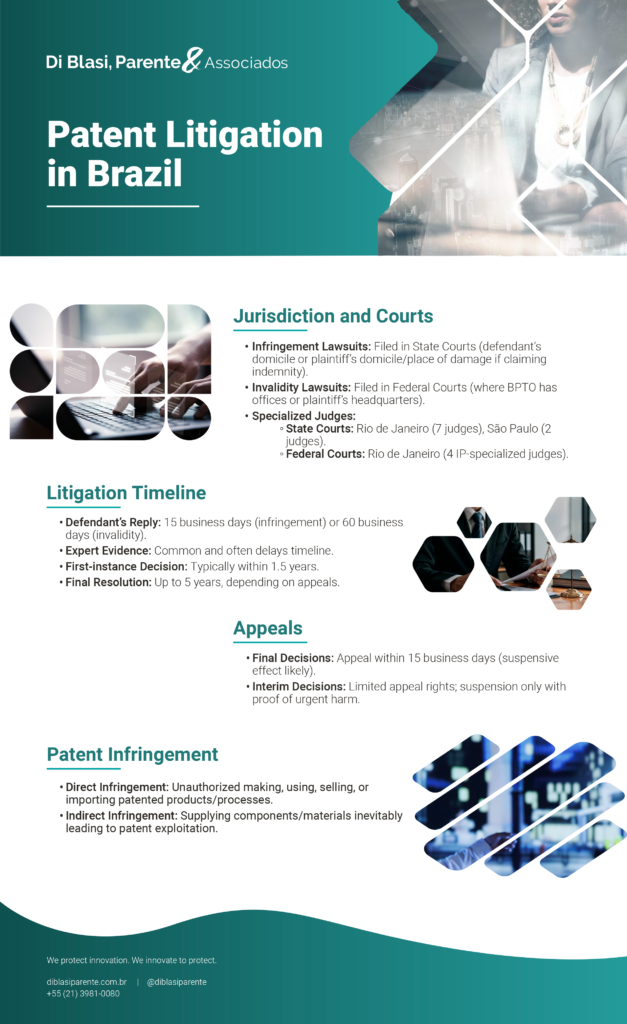
Patent Litigation
Patent and trademark filings overview in Brazil
Team
Our firm